


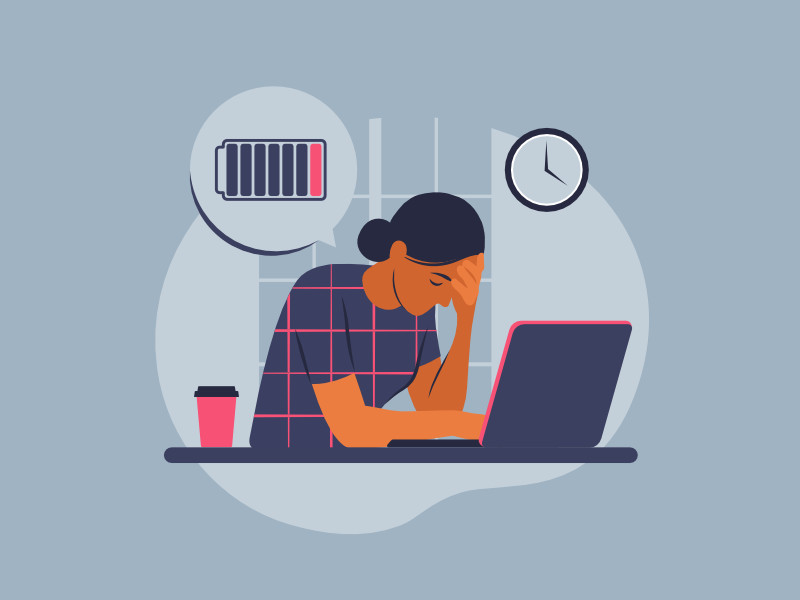
Burnout is deeply misunderstood. From the outside, it may look like simple exhaustion. From the inside, it feels like a quiet collapse.
You’re tired, but sleep doesn’t touch it.
You care, but you feel detached.
You want to function, but your body and mind simply refuse.
This isn’t weakness. It’s your whole system stepping in—because you’ve quietly ignored your limits for too long.
What Burnout Really Feels Like
Burnout isn’t just stress. Stress can push you. Burnout pulls the plug.
It’s a deep, nervous-system kind of depletion—emotional, physical, and mental. You’re not “too sensitive” or “not trying hard enough.” You’re empty.
The spark is gone. The fuel tank is reading zero. Your system is finally saying, “I’ve been running on emergency reserves, and now there’s nothing left.”
How Burnout Quietly Builds
It often happens in stages:
- The Honeymoon: You start strong—motivated, saying yes, over-delivering, powering through fatigue like a badge of honor.
- The Stress Build-Up: Irritability creeps in. Sleep suffers. Joy fades. You feel foggy, heavy, and tense, but you keep going.
- The Burnout: Depletion sets in. You feel disconnected from yourself and what you once loved. Everything feels like “too much.” Your system has hit the brakes for you.
Signs You’re Running on Empty
- Waking up already tired
- Feeling emotionally flat or numb
- That “I just don’t care anymore” feeling
- Mental fog and trouble concentrating
- Overwhelm by small, simple tasks
- A heaviness in your chest or body
- Wanting to disappear for a while
If this resonates, you’re not failing. You’re profoundly drained.
Why This Happens (It’s Not Your Fault)
Burnout isn’t a choice. It’s a consequence.
It happens when you’ve consistently:
- Said “yes” when you meant “no”
- Carried emotional weight that wasn’t yours to hold
- Rested only after you collapsed
- Felt unsafe to disappoint others
- Forgotten how to just be
It’s the cost of ignoring your own needs, again and again.
Gentle Ways to Begin Refilling
Healing starts with small, kind interruptions to the cycle.
1. Energy Mapping
Ask yourself quietly: What drains me? What nourishes me?
Do a little less of the first. A little more of the second.
Simple? Yes. Easy? No. Necessary? Absolutely.
2. Micro-Moments of Rest
Rest isn’t only a vacation. It’s:
- 30 seconds of closing your eyes
- One slow, intentional exhale
- Drinking a glass of water without multitasking
- Stepping away from your screen to look out a window
Tiny pauses prevent total shutdown.
3. Lighten the Emotional Load
You can care without carrying everyone else’s emotional baggage.
Practice a gentle boundary phrase: “I hear you, and I need a moment to sit with this.” You are not responsible for fixing everything.
4. Make One Decision—Then Stop
Burnout brings decision fatigue. So, choose one important thing to decide each day. Let everything else become optional. Your brain needs space, not more lists.
5. Soothe Your Nervous System
Forget motivation for now. Focus on regulation.
Try: slow breathing, feeling your feet on the ground, a warm shower, stretching like a cat, or listening to soft music.
You’re calming an overwhelmed system, not powering up a machine.
A Note on Healing: It’s Not a Straight Line
Some days you’ll feel a flicker of hope. Other days, the flatness returns. This is normal. You are healing a human system, not fixing a broken object. Progress comes in waves, not in a steady climb.
When to Seek Support
Please reach out if:
- The exhaustion doesn’t lift with rest
- You feel persistently disconnected or numb
- Daily tasks feel impossible for weeks
- You’re feeling cynical, hopeless, or trapped
- Your body is sending strong signals (illness, chronic pain, sleep disruption)
You don’t have to wait until you’re completely empty to deserve support.
Final Words
Burnout is your body’s firm, loving whisper: “I can’t carry all of this anymore.”
And the truth is, you were never meant to.
Healing begins not when you push harder, but the moment you finally pause—and listen.