


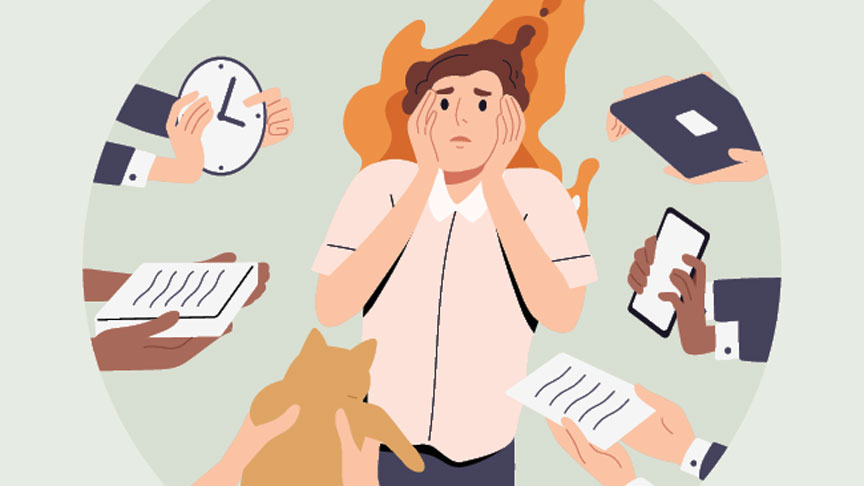
If you’ve ever searched for burnout advice, you’ve likely found grand suggestions: “Quit your job!” “Take a six-month break!” “Move abroad!”
It sounds beautiful. For most of us, it’s just not real.
True recovery doesn’t require you to dismantle your life. It asks you to rebuild your relationship with yourself—gently, slowly, and with great kindness. It begins not with a leap, but with a whisper.
Why Everything Feels So Hard Right Now
When you’re deeply depleted, even small tasks feel overwhelming. Things you once enjoyed now feel like chores.
Your system doesn’t need another overhaul. It needs stability. Predictability. Softness.
Think of it like recharging a battery that’s been completely drained for months. It won’t hold a full charge right away. It needs steady, patient connection.
What Burnout Does to Your Spark
- Motivation fades
- Energy crashes
- Emotions feel flat or numb
- Mental fog settles in
- Patience wears thin
- Confidence quietly slips away
This isn’t a new personality. It’s depletion. Your resources are empty.
Small, Sustainable Ways to Begin
1. The 90-Second Reset
Several times a day: pause. Sit. Breathe slowly. Let your shoulders drop. Make your exhale longer than your inhale.
This isn’t meditation—it’s a system reset. It gently shifts your nervous system from survival mode toward calm.
2. The One-Page Mind Cleanse
Once a day, take a single sheet of paper. Write whatever is swirling inside—no editing, no judgment, no complete sentences needed.
This clears mental static. It’s like opening a window in a stuffy room.
3. Start With Tiny Boundaries
Burnout often grows where boundaries are thin. Practice simple, honest phrases:
- “Let me think about that.”
- “I can’t add anything else right now.”
- “I need to pause.”
You’re creating space, not building walls.
4. The Rule of 1%
Ask yourself each morning: “What’s one thing—just 1%—that would feel supportive today?”
Maybe it’s drinking water first thing. Or stepping outside for five minutes. Or declining an extra task.
Small choices add up to a new rhythm.
5. Identify Hidden Drains
Exhaustion isn’t always from visible work. It also comes from:
- People-pleasing
- Carrying others’ emotions
- Pretending you’re “fine”
- Pushing through when you need rest
Start noticing these subtle costs. You can’t heal while you’re still pretending.
What Real Recovery Feels Like
Progress won’t look like a sudden burst of energy. It will feel more like:
- Moments of calm appearing more often
- Less intense emotional reactivity
- Sleep that actually feels restful
- Small, quiet sparks of motivation returning
- The ability to enjoy a simple thing—a warm drink, a good song
It’s gentle. It’s gradual. It’s real.
When to Seek Support
Consider reaching out if:
- The exhaustion feels frozen in place
- You can’t seem to access rest, even when you try
- Hopelessness or cynicism colors your days
- You feel stuck and don’t know how to take the first step
Asking for help isn’t a failure—it’s a wise step toward healing. You don’t have to find your way back alone.
A Final, Gentle Reminder
You don’t need a new life to recover from burnout.
You just need a new pace.
One with more softness, more honesty, more space, and more compassion—for yourself, first.
Healing begins when you stop demanding greatness from an empty cup, and start simply refilling it, slowly, one kind step at a time. You’re already on your way.